Capstack: funding data founders can trust
A funding directory kept current by an AI agent, with people in the loop for anything that could cost a founder a deadline.
The problem
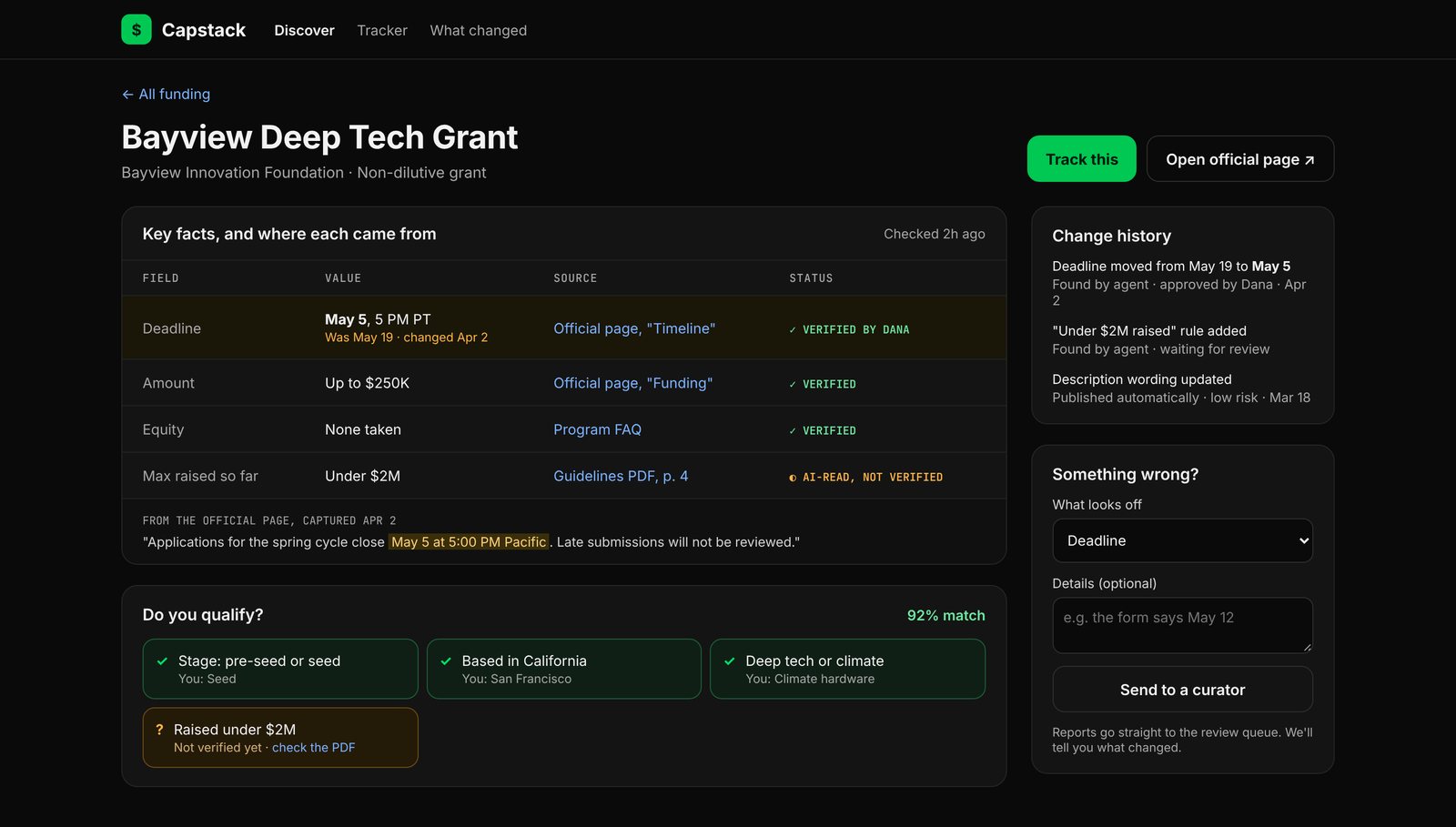
Founders look for grants and accelerators across scattered directories, many of them out of date. Eligibility rules sit deep in long documents, and deadlines move.
A directory can make listings easy to scan and still dodge the real question: where does the data come from, and why should a founder trust it?
The redesign
An AI agent checks official program pages every day and proposes changes. How much it can do on its own depends on what a mistake would cost a founder.
Founders see what's verified, what's only been read by AI, and what's still in question. Curators review anything high-risk before it goes live.
How a listing stays current
- 1 · AgentReadsChecks official pages and program feeds daily, and notes the exact sentence each fact came from.
- 2 · RulesSorts by riskTypos publish on their own. Deadlines, amounts and eligibility wait for a person. Closing a program is never automatic.
- 3 · CuratorDecidesSees a before-and-after diff, the source quote, the agent's confidence and who's affected, then approves, edits, rejects or asks the program.
- 4 · FounderKnowsSees a status label on every fact, a weekly "what changed," and can report a mistake straight into the queue.
Inside the redesign
Tell founders what changed, with proof
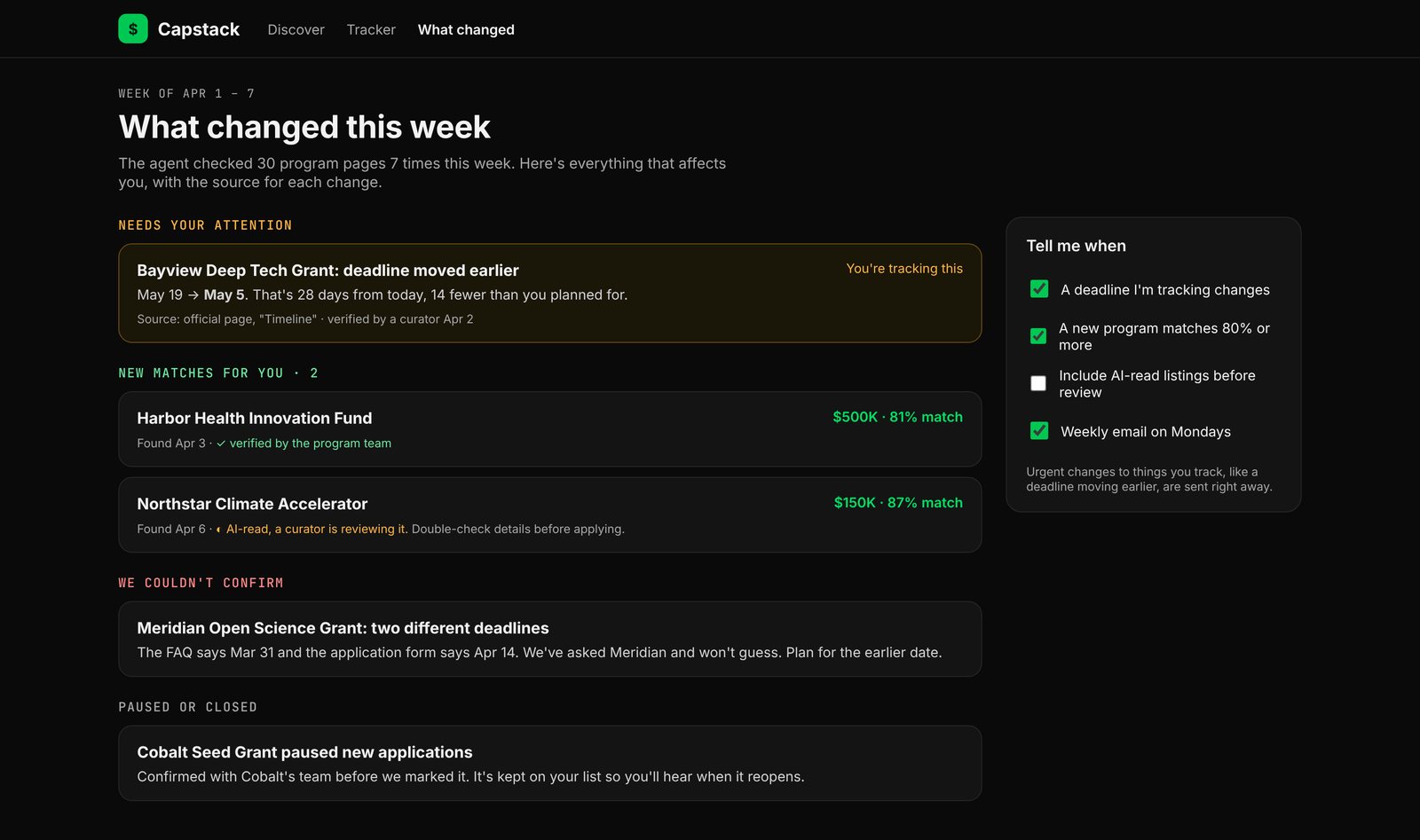
Instead of vague alerts, a weekly digest sorted by what matters: deadlines that moved, new matches, and things Capstack couldn't confirm.
Every change cites its source. Unverified listings are labeled, and founders choose whether to see them before review.
When sources disagree, Capstack says so and tells founders to plan for the earlier date, rather than picking one.
Give the human enough to decide fast
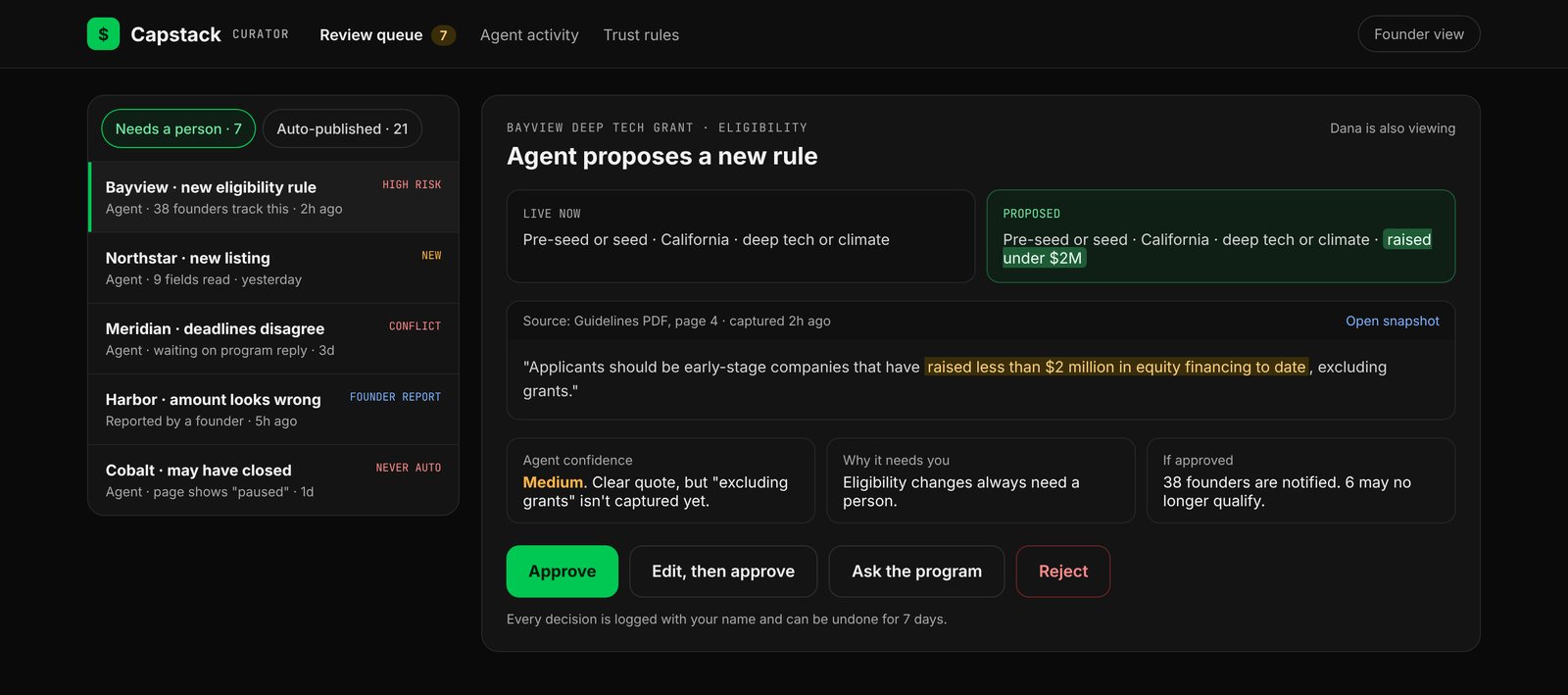
Each proposed change shows the before and after, the exact source quote, and the agent's confidence with a reason, not just a score.
It also shows the stakes: how many founders are tracking it and how many might no longer qualify.
Every decision is logged by name and can be undone for 7 days. Founder reports jump the queue.
Autonomy matched to the cost of a mistake
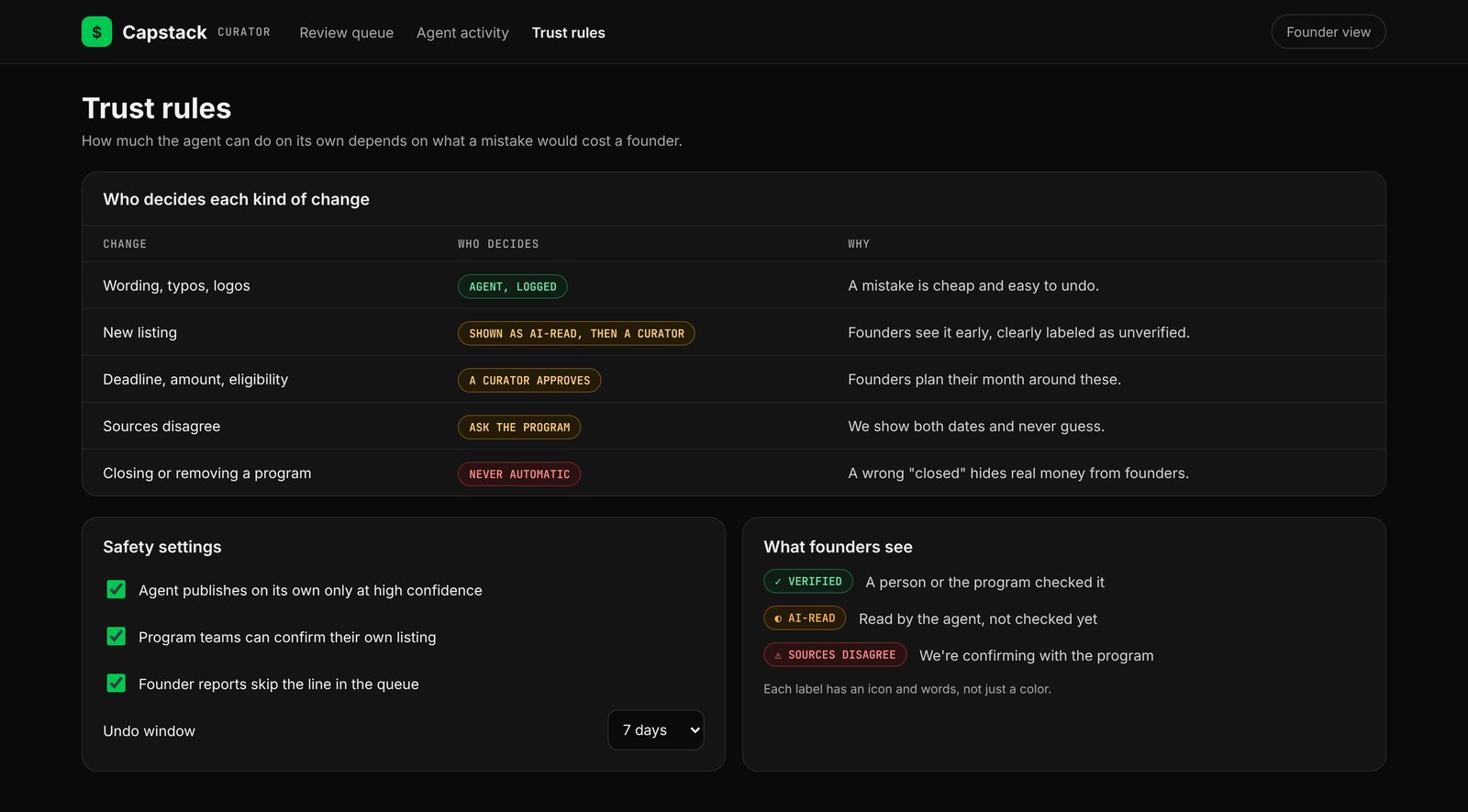
The agent's freedom shrinks as the stakes rise. A typo fix publishes on its own. A deadline needs a person.
Closing a program is never automatic, because a wrong "closed" hides real money from founders, which is worse than a stale "open."
The status labels founders see each pair an icon with words, so they don't rely on color alone.
Key decisions
- Risk-tiered autonomy.The agent does more where mistakes are cheap and less where they cost a founder money or a deadline.
- Show the source, not just the answer.Each fact links to the sentence it came from, so founders and curators can check it in seconds.
- Never guess when sources disagree.Showing both dates and asking the program is slower, but it's honest, and founders can plan around it.
- Explain every match score.A bare "91% match" asks for blind trust, so each score lists the reasons behind it.
What exists and what doesn't. A 6-screen clickable prototype with fictional programs; the agent isn't built and nothing has been tested with founders yet. Next: test the agent on 30 real program pages to measure how often it reads deadlines and eligibility correctly, then run sessions with 5 founders and plant one wrong deadline to see whether the labels help them catch it.