Groundwork: the patient's story before the scan
A context assistant for radiologists. It pulls a patient's history, labs and prior reports into one view before the scan is read, links every line to the record it came from, and flags what's missing or contradictory. It never suggests a diagnosis.

The problem
I interviewed a radiology resident about their day. A study arrives with a one-line request like "?Mass". The history, labs, prior surgery and old scans are spread across PACS, RIS, the hospital record and WhatsApp, and they hunt for them by hand.
In their words: "Sometimes the indication on the requisition form is too brief, making clinical correlation difficult." Meanwhile one finding can sit in a single image out of thousands.
The idea
Asked what a student should build, they said: "intelligent clinical context systems" that combine prior reports, labs, pathology and notes into one concise view.
Groundwork does that and stops there. Every line links to its source, gaps and conflicts are shown instead of filled in, and diagnosis stays with the radiologist.
How a case is prepared
- 1 · GatherReads the recordsThe request, notes, discharge summaries, labs, prior reports and uploaded outside reports for that hospital ID.
- 2 · GroundLinks every lineEach line points to its record and the exact words. Quotes stay word for word.
- 3 · FlagShows the gapsMissing items, records that disagree, and follow-ups recommended in past reports that never happened.
- 4 · RadiologistDecidesResolves conflicts, asks the referring team, and writes the findings. Nothing is sent without them.
Inside the prototype
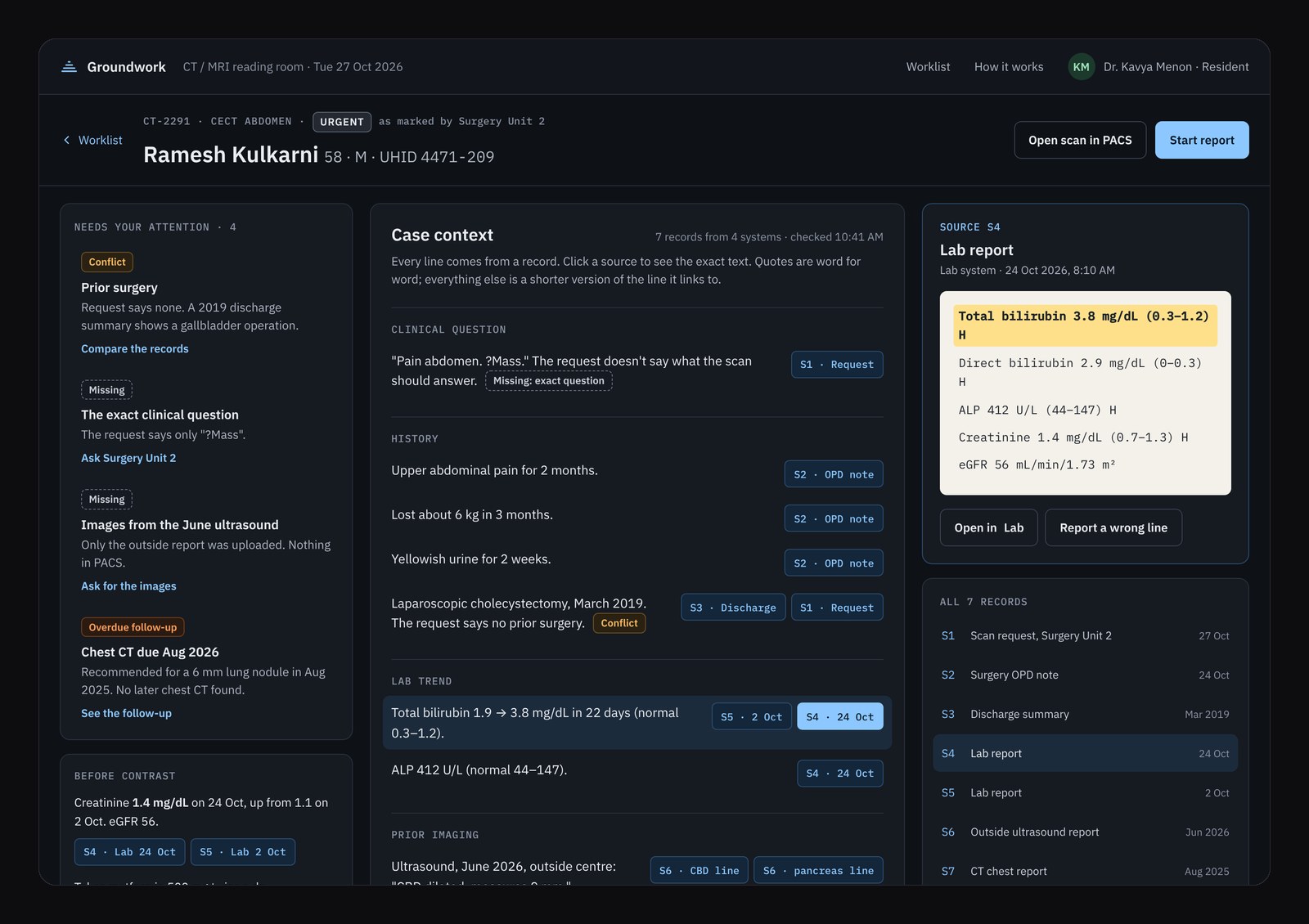
One click from a line to the record
Every line carries a source chip. Clicking it opens the record on the right with the exact words highlighted, so checking takes a second, not a search.
Quotes stay quotes. Anything shortened links to the line it came from, and the panel says when the context was last checked.
"Looked for, not found" lists what's absent, including which systems aren't connected, so a gap isn't mistaken for a clean history.
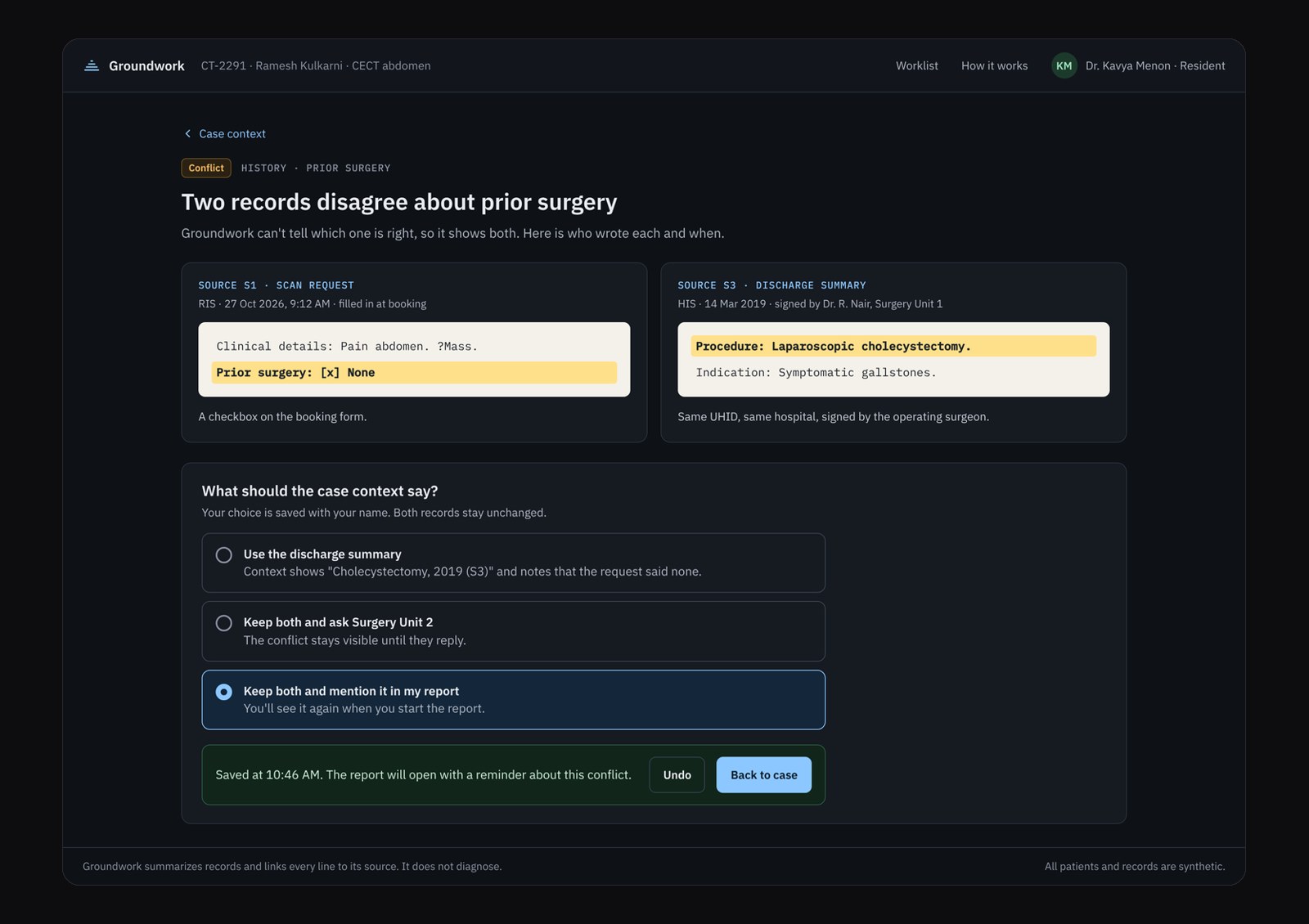
Show both, let the radiologist decide
When records disagree, Groundwork doesn't pick a winner. It puts both side by side with who wrote each one and when.
The choice is logged with a name and can be undone. Both original records stay unchanged.
Asking is one step away. Groundwork drafts the question to the referring team from the gaps it found, and nothing goes out until the radiologist presses Send.
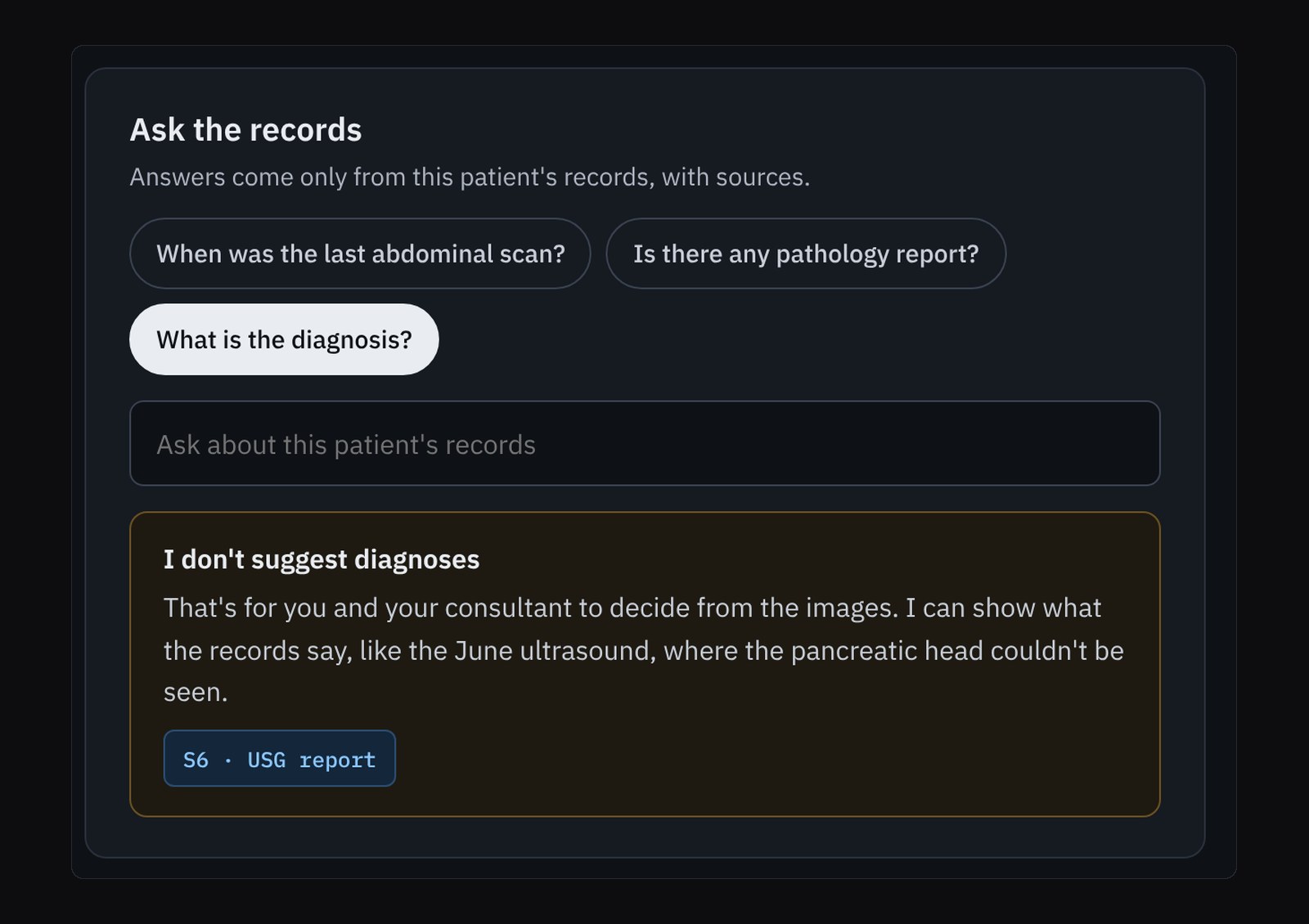
It answers about records, never about disease
The interview drew the line clearly: AI can assist, but it should never decide alone in complex diagnoses or oncology.
Asked for a diagnosis, it declines and points back to what the records actually say, with the source.
Diagnostic words are blocked from summaries: "likely", "suggestive of", "consistent with". If a source uses them, it's quoted, not paraphrased.
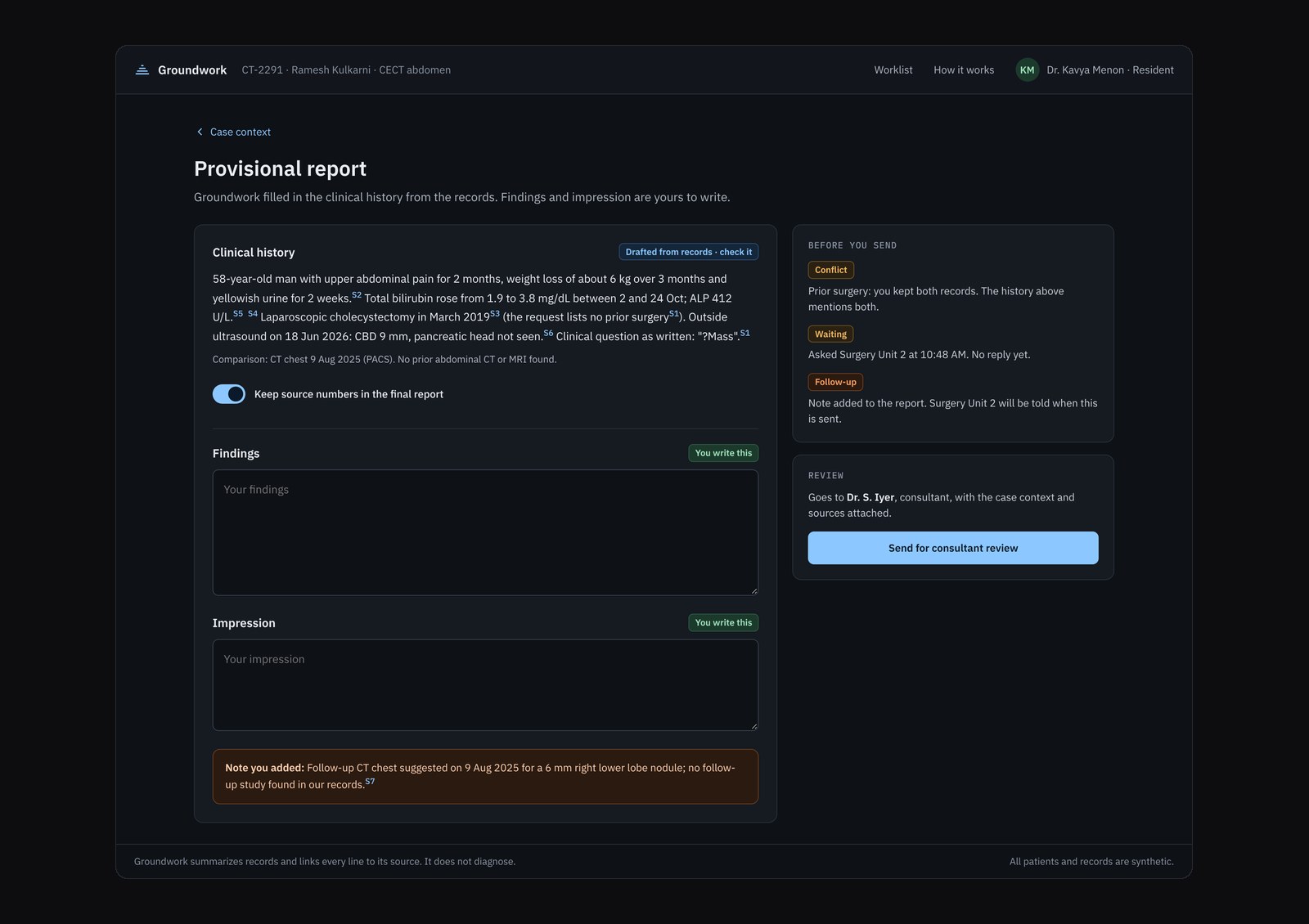
Context goes in; findings stay human
The clinical history arrives drafted from the records, with source numbers the radiologist can keep or drop.
Findings and impression are empty and labelled "You write this". Groundwork never drafts them.
Nothing gets lost in handoff. Open conflicts, unanswered questions and overdue follow-ups are listed before sending, and the consultant sees the same sources.
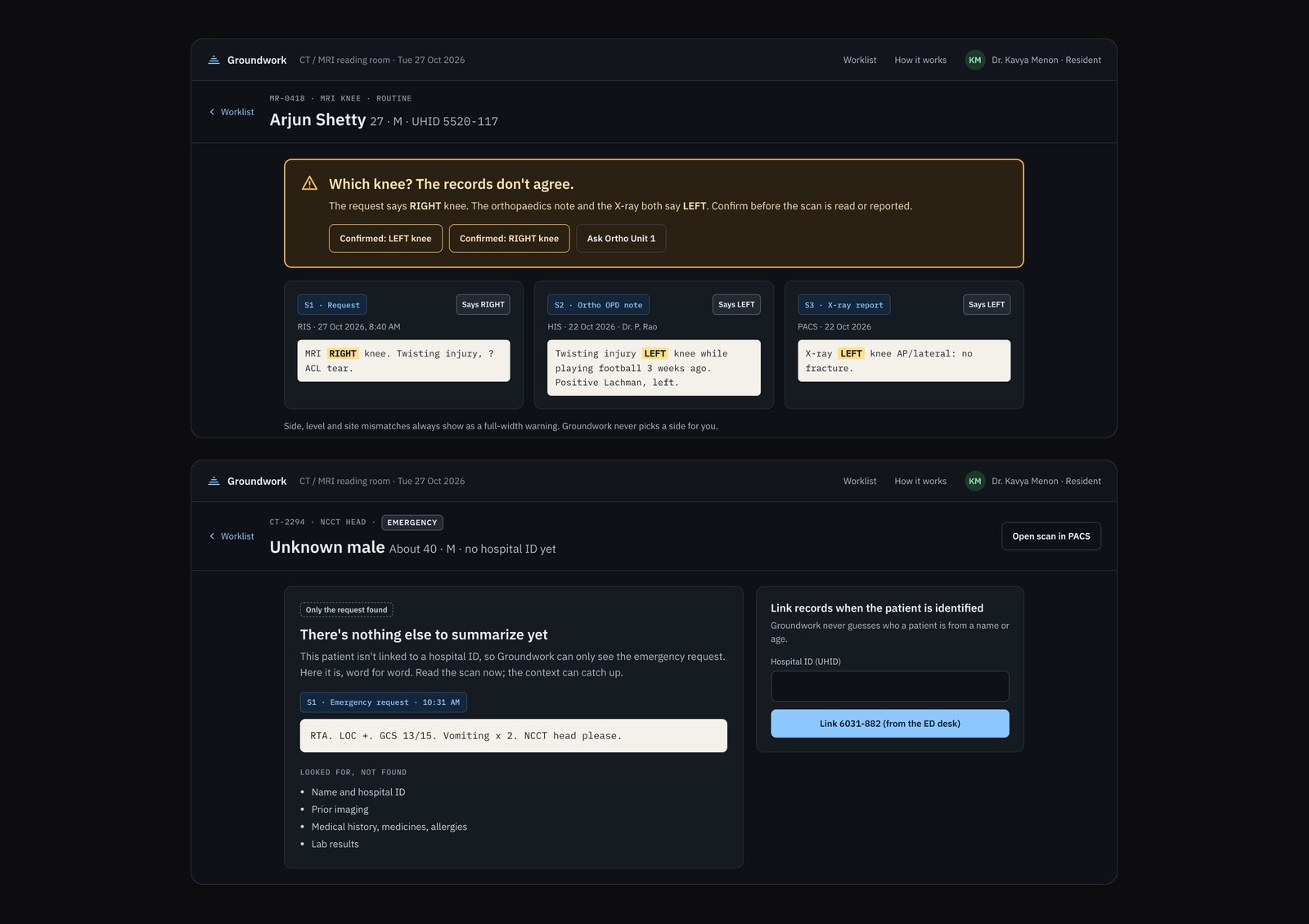
Loud only for safety, honest when thin
Most of Groundwork is quiet, because reading a scan takes full attention. Side, level and site mismatches are the exception: they take over the screen until someone confirms.
It never picks a side. Both confirm buttons look the same.
With only an emergency request, it won't write a summary from one line. It quotes the request and never guesses who an unidentified patient is.
Key decisions
- Records, not diagnosis.Staying on the "assist" side is a design choice, not a setting. It's narrower than an AI that reads images, and that's exactly why it's easier to trust and to check.
- Show conflicts instead of settling them.The trade-off: more for the radiologist to resolve. A silent pick could put the wrong history into a signed report.
- Say what's missing, and why.Each gap says where Groundwork looked and which systems it can't see, so missing data isn't mistaken for a clean history.
- Priority stays with the requesting team.Context tags describe the records, not how sick the patient is. Re-ranking the worklist would need clinical validation this concept doesn't have.
What exists and what doesn't. The research is one interview with one resident at one teaching hospital in India, so the six insights are leads to test, not proven needs. All patients and records are synthetic. Record retrieval, source linking and the word filter are designed, not built. Next: walk the same resident through the prototype (they offered to review it), add a consultant and a referring clinician, and measure time to find prior history and how often people open the source links.